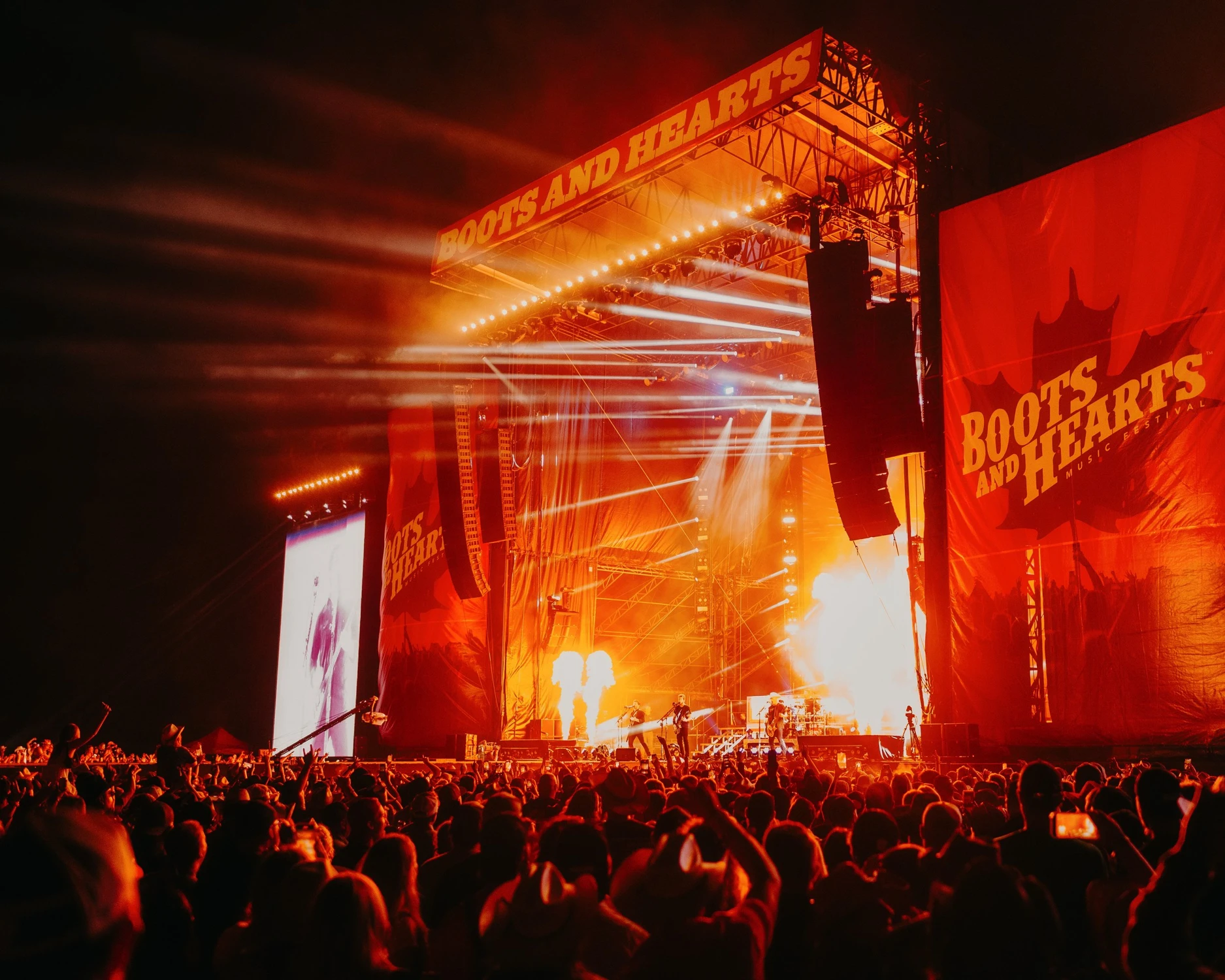
Remember more than the headline
A useful concert notebook does not need to reconstruct every song in order. It can hold the small details that a ticket stub misses: an opening artist’s name, a harmony you want to revisit, a story between songs or the person who recommended a record in the queue.
Choose a few prompts before the show so you do not spend the evening writing. The notebook is a memory aid, not a review assignment. It should leave enough room for the concert itself.
Give the event a reliable identity
Record the artist, venue, city and calendar date. Add the bill or organizer link if you have one. Distinguish the date you attended from the date on a later upload or social post. That small piece of context makes the note useful when you return to it years later.
For a festival appearance, include the stage and edition. Official programs such as MerleFest’s can help resolve those details afterward. If you cannot remember a song title, describe the moment and leave the title open until you can identify it confidently.
| Choice | What to record | Why it matters |
|---|---|---|
| Event | Artist, place, date | Identify the night |
| Sound | One musical detail | Capture a moment |
| Discovery | Artist or recording to follow | Create a next step |
| Context | A source or unresolved question | Keep uncertainty honest |
Use musical prompts that reward attention
Try one prompt for sound, one for interaction and one for discovery. What instrument caught your ear? How did the band hand a musical idea from one player to another? Which performer or song do you want to hear again? You can answer each in a few lines.
Separate what you observed from what someone told you. “The singer introduced the song as…” preserves an attribution. “This was the first performance ever” needs evidence beyond a memory of an announcement. Personal notes can be uncertain without becoming less meaningful.
Turn a memory into a next step
Within a day or two, choose one follow-up: find the opener’s official recording, check an album credit or save a relevant artist guide. Smithsonian Folkways’ catalogue and liner-note approach offers a useful model for following from a recording into its context.
Keep private details out of a public version of your notebook. A shared note can name the public event and musical discovery without reproducing somebody’s contact details or a private conversation. If you later write a review, return to the source links and distinguish remembered impressions from newly verified facts.
Write a useful note without writing a review
Try the three-line method after the show: one line identifying the night, one describing a musical moment and one naming a recording to find. That is enough to preserve a route back into the experience. You can add a longer account later if you want, but a notebook should not make a good evening feel incomplete because you did not produce polished prose. Descriptive language is often more useful than a superlative. “Two voices entered on the final phrase” gives your future self something to listen for.
If you return to the same artist, compare the notes cautiously. A changed impression may reflect a different room, seat, arrangement or your own familiarity with the songs. It is not automatically proof that one performance was objectively stronger. Keep the conditions of your listening in the entry: where you stood, whether you knew the material and whether an interruption affected your memory. Personal context belongs in a personal notebook and can make a later reflection more honest, particularly when a vivid recollection is being turned into a public recommendation.
A paper notebook can leave one margin for later source checks. Use that margin for a corrected spelling, official recording link or clarified introduction without erasing the original memory. The result shows both what the night felt like and what you learned afterward.
- Do not reconstruct an exact setlist from uncertain memory; keep unknown songs clearly unidentified.
- Record an opener’s spelling from the official bill so the discovery remains findable after the night.
- Leave space for a later correction, especially when a stage introduction was difficult to hear.
Follow the sources
Explore the original records, archive material and published accounts behind this article. Each source describes a particular release, performance, collection or event; keep that context when comparing examples.