
Read the role before the name
A songwriter credit identifies contribution to a composition. A producer credit concerns the creation of a recording or project. An engineer’s credit identifies a recording or technical role, while an instrumental credit identifies performance. One person can hold several of these roles, but the roles are still different. Seeing a familiar name twice is not a clerical repetition.
Begin with the exact album edition and the scope of the source. A press release may name the main producer but omit additional production and track-specific players. A booklet may be more detailed; a digital service may expose individual track credits. Preserve that level of detail rather than combining everything into a misleading list of people who supposedly worked on every song.
Four album teams, four reading lessons
Traveller’s label announcement separates Dave Cobb’s production from Vance Powell’s recording work and identifies writers of its outside compositions. Brandy Clark’s 2023 self-titled album announcement names Brandi Carlile as producer. HARDY’s official announcement goes further into a project-wide and track-specific hierarchy. Jelly Roll’s Whitsitt Chapel announcement identifies a broad co-writing network. Each source answers a different credit question.
For a track-level example within Whitsitt Chapel, the label’s release-day credits name Jason DeFord and David Ray Stevens as the writers of “Save Me,” while Lainey Wilson is the featured performer. The same source distinguishes the track’s producers from that featured role. This gives the table a concrete case where performer, writer and producer lists should remain separate.
| Album | Documented point of entry | What to verify next |
|---|---|---|
| Traveller — Chris Stapleton | Producer, recording engineer and outside songwriters | Full edition-specific production and player credits |
| Brandy Clark — Brandy Clark | Brandi Carlile identified as producer | Track-level guests and instrumental roles |
| the mockingbird & THE CROW — HARDY | Project producers plus marked additional co-production | The symbols attached to each track |
| Whitsitt Chapel — Jelly Roll | Named co-writers across the album | Which writers belong to the selected song |
Follow the symbols on HARDY’s release
HARDY’s official tracklist uses markers to distinguish additional co-production on selected songs from the credits that apply across the project. This is a good lesson in reading the whole page rather than lifting a name from its introductory paragraph. A footnote can change the scope of a credit, and a credit that looks secondary in typography may describe a significant part of a particular recording.
Keep a structured note with fields for person, role, track scope and source. If a source says “all songs,” record that phrase in your notes. If it marks one track, retain the track name. Do not flatten the two into an album-wide claim. The resulting table is more useful for discovery because it connects a person to the exact recording you can hear.
Use the team to find a new listening path
A shared producer is one possible route between albums, but it is not proof that the albums sound alike. Artists bring different songs, bands and ambitions to the same collaborator. Start by comparing one practical aspect: the placement of a voice, the amount of instrumental space or the relationship between a lead part and the rhythm section. Then see whether a published account illuminates the choice.
A songwriter connection works differently. A writer might appear on a song performed by someone whose own records you have never heard. Follow that credit to the writer’s released catalogue or a documented songwriter performance. Resist assigning a particular line or hook to one co-writer unless an account from the writing session supports it. Credits recognize collaboration without narrating every contribution.
Build a credit card that stays useful
For each album, save its title, artist, edition, release source, credited person, exact role and the date you checked the information. Add one next-listen suggestion linked to a recording rather than a vague “similar artists” label. Leave unknown fields blank or describe them as not supplied in the source. An empty cell is more honest than a role inferred from a musician’s reputation.
This casebook is a selected set of examples, not a census of Nashville labor or a complete discography for any contributor. Its value lies in making the chain inspectable. Once you can explain why a name is in the table and which recording it belongs to, an album cover opens into a larger musical community without losing the specificity of the songs.
Follow the sources
Explore the original records, archive material and published accounts behind this article. Each source describes a particular release, performance, collection or event; keep that context when comparing examples.
Related artist guides
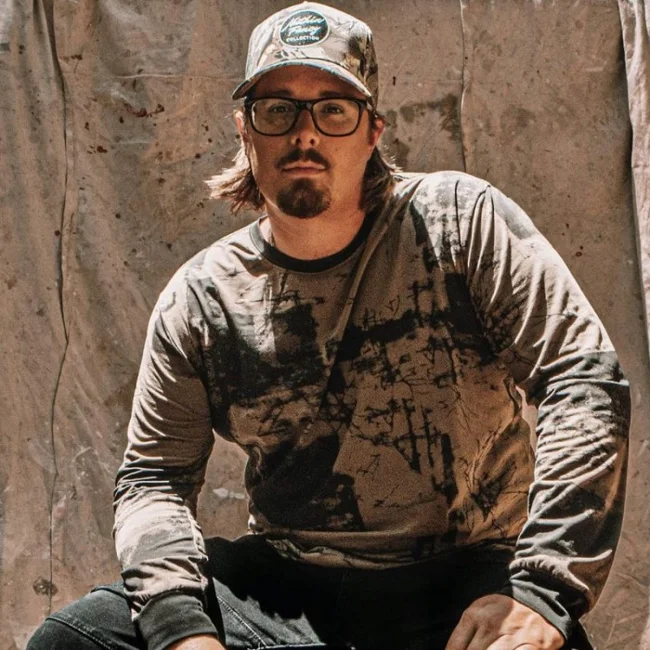 HARDYArtist, recordings & live dates ↗
 Lainey WilsonArtist, recordings & live dates ↗
 Jelly RollArtist, recordings & live dates ↗