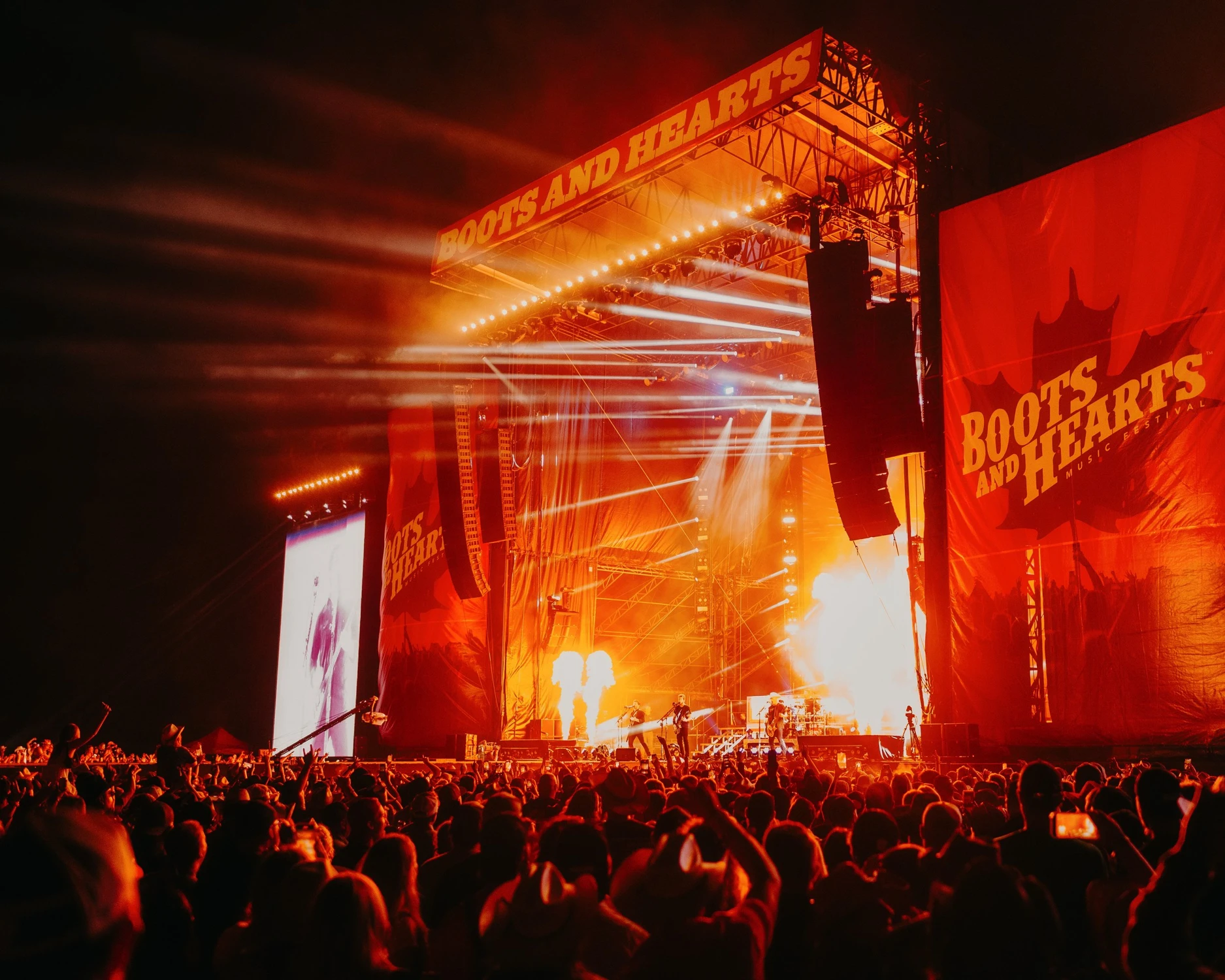
An encore is one way to finish
A concert can end with a planned final sequence, pause for an announced intermission or use the familiar departure-and-return pattern called an encore. Those structures affect anticipation, but none is a universal requirement of country performance. The existence of an encore does not by itself prove spontaneity, and its absence does not show that an artist withheld part of the promised evening.
To discuss a particular show accurately, establish the complete running order from a reliable account or complete recording. A single song video, a cropped setlist image or the end of a broadcast edit cannot demonstrate what happened after the cameras stopped. This guide therefore uses documented formats and released performances as reference points while keeping the limits of each source visible.
Case one: an announced two-set evening
Eric Church’s official 2017 Holdin’ My Own announcement promised two full sets separated by an intermission and no opening support. That is firm evidence about the intended architecture of the tour. It is not, by itself, a record of the exact closing sequence at every date. The distinction is useful: an artist’s announcement can establish a format while a particular ending still requires show-specific documentation.
For a visitor, the practical consequence is to read the current event information. A departure in the middle of a two-set program is not necessarily the conclusion. Conversely, a long continuous performance may have already delivered its intended finale without staging another return. Context explains the pause more reliably than the mere sight of an empty stage.
Case two: the recorded concert and the broadcast ending
Willie Nelson’s official Live at Budokan material identifies the 1984 Tokyo performance and its ensemble. A released concert of this kind offers a substantial performance document, but the boundaries of a release still need to be read as release boundaries. Track divisions, credits and video edits can shape how a listener encounters the sequence long afterward.
Austin City Limits provides a different example: a performance is recorded before an audience and presented as a television program. The end of an episode is an editorial and broadcast boundary. It should not be used alone to claim that the artist always ends a full concert that way, or that no further music occurred at the taping. Name the object you are analyzing.
Case three: a live collection is not one entire night
Kenny Chesney’s Live in No Shoes Nation is an officially documented live collection. Its concluding track creates an ending for the album, but that does not automatically identify the final song of every concert represented within it. A compilation can create a satisfying listening arc from performances selected across an artist’s live history. Treating that arc as one unedited set would confuse two different forms.
These examples supply a useful hierarchy of evidence. An artist announcement describes a planned format; a dated complete-show document can describe a particular evening; a broadcast or album describes the work it publishes. All can be valuable, provided the conclusion does not extend beyond the source.
| Source type | Can establish | Cannot establish alone |
|---|---|---|
| Tour announcement | Intended format | Every night’s exact ending |
| Complete dated show record | That performance’s sequence | A permanent artist policy |
| Television episode | The broadcast presentation | Everything before or after the edit |
| Live compilation | The released listening sequence | One continuous concert |
Read the room’s actual conclusion
In person, listen and look for the combination of musical resolution, bows, lighting and venue announcements. Follow staff directions rather than treating applause as a contract for additional songs. If your journey requires an early departure, make that choice consciously; do not assume an encore will provide a predictable buffer or a fixed number of extra minutes.
Afterward, describe what the ending did musically. Did it leave a refrain in the room, return attention to one voice or bring the whole ensemble into a final gesture? Those observations can explain the experience without speculating about private motives. A thoughtful concert account tells the reader how the performance resolved, not whether it obeyed a ritual.
- Distinguish intermission from an ending.
- Identify whether a source is complete or edited.
- Do not infer an artist policy from one date.
- Treat an album’s ending as an album choice.
- Follow current venue instructions.
- Describe musical resolution before judging the format.
Follow the sources
Explore the original records, archive material and published accounts behind this article. Each source describes a particular release, performance, collection or event; keep that context when comparing examples.