
Prepare the room and the running order
Use a legitimate music service or recordings you own, and cue the exact album versions in advance. Put screens away during playback unless a guest needs lyrics or another access aid. Set a comfortable level and give everyone a seat where they can hear. Ask about content preferences before choosing songs; country storytelling can include violence, substance use and difficult relationships.
The schedule below uses time blocks rather than pretending every platform has the same track length. Reserve about twenty-five minutes for music, fifteen for discussion and five for welcoming and closing. If a selection runs long, shorten the conversation rather than abruptly cutting off the song. A smaller group can use fewer tracks and spend longer on the details.
Six selections with different jobs
Begin with Brandy Clark’s “Hold My Hand” from 12 Stories as a close-listening invitation. Move to Midland’s “Drinkin’ Problem” for the relationship between pulse and ensemble. Try Sierra Ferrell’s “Dollar Bill Bar” for a change of vocal character, then Chris Stapleton’s “Traveller” for how a performance establishes motion. Close the music sequence with Kacey Musgraves’ “Slow Burn” and a selection from Charley Crockett’s The Man from Waco.
These are editorial choices with official catalogue references, not representative samples of every country tradition. Substitute a track if the group knows it too well or wants a different perspective. Preserve each selection’s listening job so the sequence still has variety. A group drawn toward bluegrass could replace one band track with an officially released Alison Krauss & Union Station performance.
The 45-minute host card
Print or copy the running order and write the exact source beside each song. The host’s job is to protect the listening time and invite specific observations, not to deliver a lecture before every track. Offer one short prompt, play the song, and allow a moment of quiet before asking anyone to explain their reaction.
| Time block | Activity | Prompt |
|---|---|---|
| 0–5 minutes | Welcome and choose a listening focus | What do you usually notice first? |
| 5–13 minutes | First two songs and brief responses | Which small detail stayed with you? |
| 13–22 minutes | Next two songs | What changed the sense of movement? |
| 22–32 minutes | Final two songs | Where did the arrangement leave space? |
| 32–42 minutes | Compare observations and replay one passage | Can we locate the difference we heard? |
| 42–45 minutes | Each person chooses a next listen | Which musician or album will you follow? |
Ask questions people can answer
“Did you like it?” can end a conversation quickly. Ask instead which sound appeared first, where attention shifted or what the accompaniment did while the singer paused. A guest who does not know musical terminology can still describe a recurring low note, a voice joining late or a sudden change in energy. Translate jargon when it becomes a barrier.
Let disagreement remain productive. One listener may find a vocal intimate while another finds it distant. Ask them to identify the passages behind those impressions. Do not demand that everyone hear the same emotion. Specific listening observations can coexist with different personal responses, and a replay can illuminate both without establishing a winner.
Give the evening a useful afterlife
Keep a shared list of song titles, artists, release titles and the group’s next-listen suggestions. Avoid turning the notes into a rating table unless everyone wants that activity. A musician credit, songwriter connection or officially released live version often offers a more interesting next step than a score out of ten.
At the next gathering, invite a guest to bring one contrasting performance of a previous selection. Use the same source-identification habit and spend a few minutes comparing arrangement roles. Over several evenings the group builds its own listening history: not an attempt to master country music in one night, but a growing collection of precise questions and rewarding recordings.
Leave the final choice with the guests: the next session can follow a songwriter, a supporting musician or one arrangement question that divided the room.
Follow the sources
Explore the original records, archive material and published accounts behind this article. Each source describes a particular release, performance, collection or event; keep that context when comparing examples.
Related artist guides
 Brandy ClarkArtist, recordings & live dates ↗
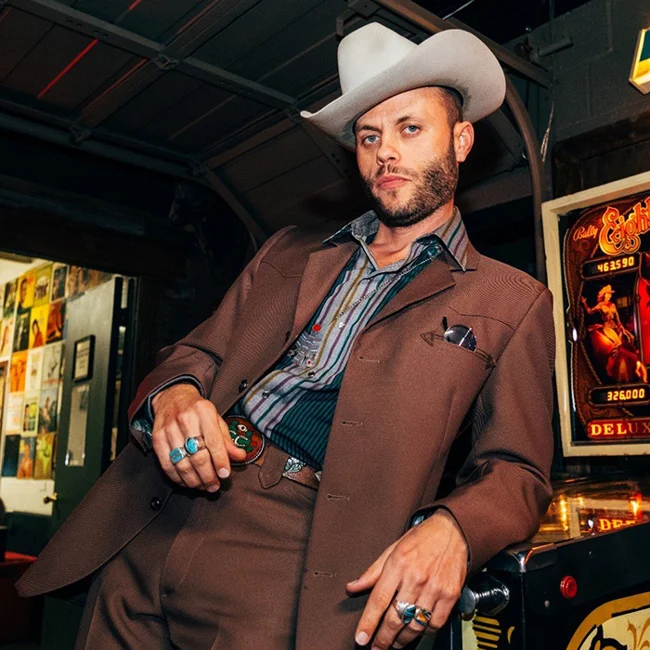 Charley CrockettArtist, recordings & live dates ↗
 Sierra FerrellArtist, recordings & live dates ↗