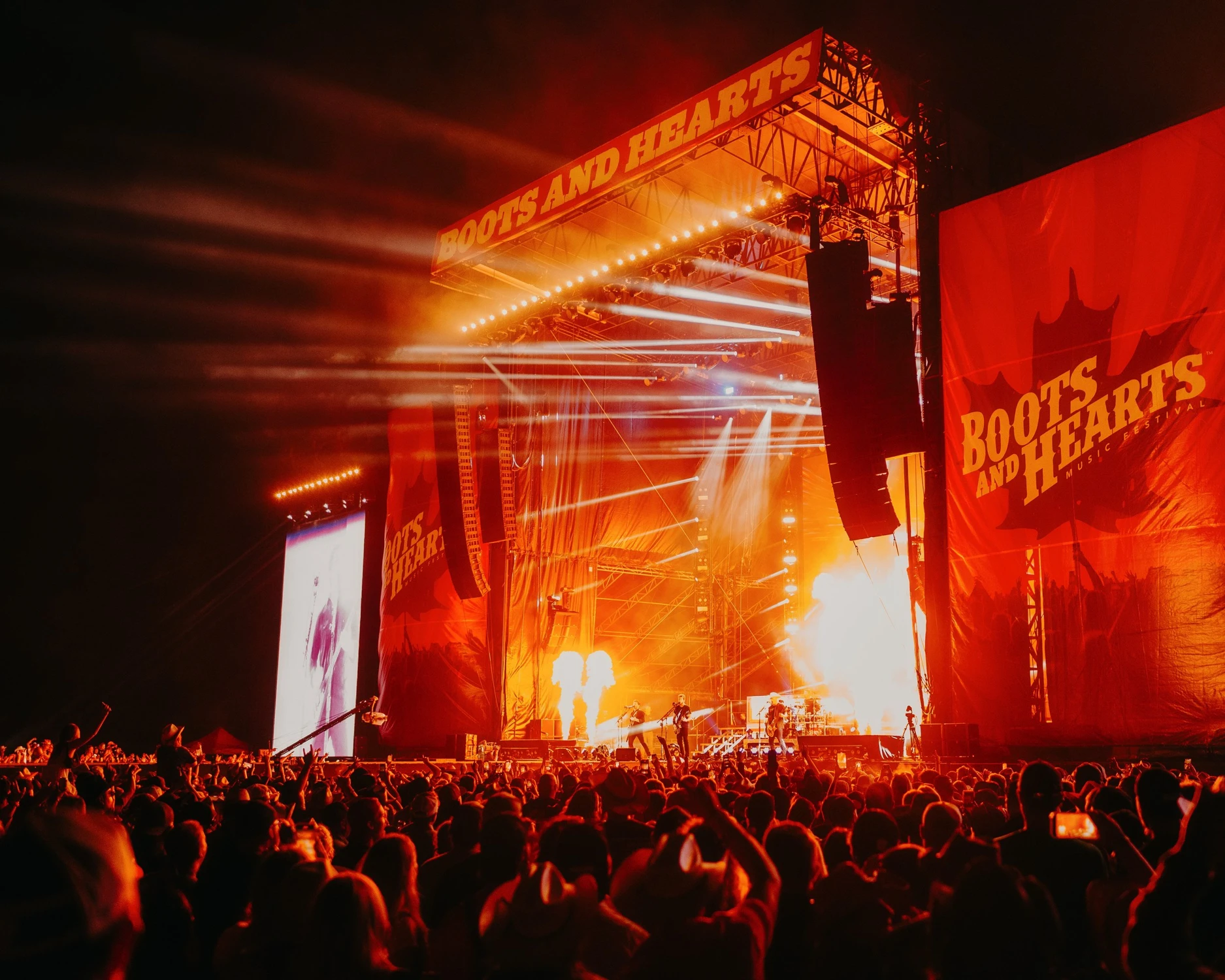
The crowd has a story before the first song
A concert photo sequence works when its pictures explain an experience rather than merely prove a celebrity was present. Arrival, wayfinding, waiting, shared attention and departure are all subjects. A close-up of a singer cannot stand in for every part of an audience’s evening. Neither can a generic festival crowd accurately represent a different named event.
MerleFest’s official 2023 fan album is a documented audience-oriented collection. It is a viewing reference here, not a newly commissioned CountryStage reportage assignment. The organizer’s photo policy supplies additional context for how performance photography is handled at that festival; it should not be generalized to other venues.
A closer look, one question at a time
| Focus | What to record | How to use it |
|---|---|---|
| Arrival | Place and orientation | Caption only identified locations |
| Attention | Audience relationship to stage | Avoid guessing private emotions |
| Departure | Transition out of the event | Do not invent a chronological ending |
An image sequence needs honest captions
A useful caption identifies what is actually documented: event, year, photographer where supplied, and a visible action. It should not assign a person’s reason for attending, their relationship to the artist or their emotional state. When presenting an organizer gallery, retain the distinction between promotional selection and independent reportage. A cheerful fan album can illuminate one side of a weekend without documenting every visitor’s experience. If exact times are unavailable, group pictures thematically rather than inventing a beginning-to-end chronology.
A gallery can be read thematically
For the MerleFest fan collection, look for differences in scale: a broad view explains where people gather, a medium view shows shared activity, and a close view can reveal an object or gesture. A sequence built from those scales feels different from a row of nearly identical stage photographs. The viewer learns how a crowd occupies a place, not merely how many pictures were taken.
CountryStage’s treatment is a reader’s guide to the organizer’s existing album. It is not a claim to have photographed the event. Open the source album to preserve its credited context and original image order. If using an individual picture elsewhere, retain the photographer credit supplied with it and verify that its caption belongs to that picture. A festival image is not interchangeable with another year’s edition.
A photo-story checklist for your next event
Before taking a picture, decide what information it will add. A sign can establish place, a path can explain movement and a wide view can reveal the relationship between audience and stage. You do not need a recognizable artist in every frame to make a concert story. You do need enough context that another viewer knows which event the image belongs to.
Keep people’s experience in proportion. One photograph of a crowded area does not measure attendance, and one empty patch does not measure failure. Time of day, framing and stage schedules can all affect what falls inside the picture. A photo essay is strongest when its captions make the visible scene understandable without stretching it into an unsupported report about the entire festival.
Watch, listen & explore
MerleFest: Fans Having Fun, 2023The organizer’s 2023 audience album, presented as a source gallery rather than newly commissioned reportage.Open source ↗MerleFest: Festival InformationOrganizer policy context; a reference page rather than a performance video.Open source ↗Follow the sources
Explore the original records, archive material and published accounts behind this article. Each source describes a particular release, performance, collection or event; keep that context when comparing examples.