What a stage plot actually communicates
A stage plot is a practical diagram of a performance setup: where people and equipment are intended to be, and often how that layout connects with an input list or other technical information. It is not a picture of the finished lighting design, a guarantee about the audience’s view or a complete explanation of a band’s sound. The same musical roles can be arranged differently in another room.
The diagram used here is an original illustrative country-band setup, not a leaked rider or a claimed plot for Whiskey Myers, the SteelDrivers or any other named act. That distinction matters. A useful teaching drawing can explain the system without presenting invented production requirements as an artist’s real equipment list.
Begin with the musical jobs
Imagine a singer at the front, rhythm guitar and lead guitar at the sides, bass and drums providing the central pulse, and a steel or keyboard position where the player can see the ensemble. This is one possible arrangement, not the correct position for every band. Start by asking what each person needs to hear and see to play together. A visual line to another player can be as important as a visually balanced stage picture.
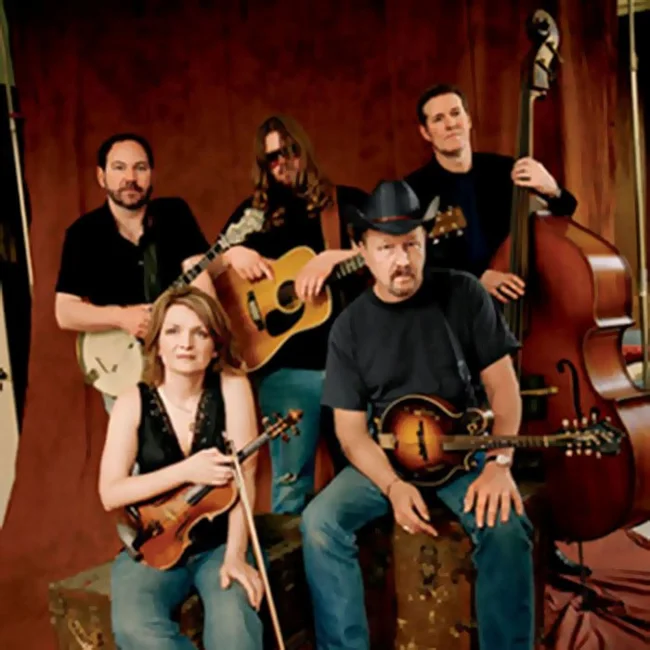
Now imagine an acoustic string ensemble with different needs. Fiddle, mandolin, banjo, guitar and bass can distribute rhythmic and melodic work without a drum kit. The comparison is about musical function, not a claim that one setup is simpler. Fewer visible amplifiers can still involve a carefully managed sound system.
Distinguish the audience mix from the monitor mix
Shure’s PSM300 guide describes sending instrument and microphone signals through a mixer and creating monitor mixes for performers. That distinction explains why a musician can request a change the audience does not hear. The singer may need a clearer vocal reference while another player needs more timing information. There is no single mix shared identically by every person on stage and in the room.
A floor wedge and an in-ear system are different ways of delivering monitoring. Their presence does not establish the exact sound reaching a performer, and a camera shot cannot reveal all routing choices. Read an actual musician or engineer account before attributing a specific monitoring preference to an artist.
Follow one signal from source to listener
Take the illustrative acoustic guitar. Its sound may be captured by a microphone, a pickup system or a combination chosen for the performance. That signal can be adjusted and sent toward different destinations, including the main sound system and the musician’s monitor. The audience sees the guitar but only part of the path that makes it audible at concert scale.
A stage plot and input list therefore answer different questions. The plot shows location; the list identifies required connections. Neither alone tells you every artistic choice. The original diagram should let you select a role and follow its purpose rather than overwhelming you with an invented channel count.
| Diagram element | What it explains | What remains unknown |
|---|---|---|
| Player position | Spatial relationship | Exact sound at each seat |
| Microphone or input | A capture point | Every processing decision |
| Monitor position | A performer reference path | The individual mix |
| Instrument role | Musical responsibility | A fixed arrangement for every song |
Use the plot to watch more attentively
At a concert, notice which players exchange cues, how a lead feature is handed across the stage and whether an instrument change alters the layout. These observations connect the diagram with music. Avoid interpreting every gesture as a technical problem; a glance can be a musical cue, a practical check or something the audience cannot identify.
The best production explainer makes the work legible while preserving uncertainty. You can understand why a stage needs sightlines, capture and monitoring without pretending to know an artist’s private specifications. Once those systems become visible, the performance often feels richer: the singer is part of an ensemble, and the ensemble is supported by people whose work is usually outside the spotlight.
- Treat this layout as an illustrative model.
- Identify musical roles before equipment brands.
- Separate location from input requirements.
- Distinguish room sound and performer monitoring.
- Use musician accounts for artist-specific details.
- Watch cues without inventing their meaning.
Follow the sources
Explore the original records, archive material and published accounts behind this article. Each source describes a particular release, performance, collection or event; keep that context when comparing examples.
Related artist guides
 Whiskey MyersArtist, recordings & live dates ↗
 The SteelDriversArtist, recordings & live dates ↗