Four dimensions of a guitar sound
Listen first to attack: how a note begins. A clear, percussive edge can make a short phrase feel rhythmic. Next consider sustain: how long the note remains audible. Then listen to brightness, the sense of upper-frequency emphasis, and saturation, the roughness or compression that may accompany an overdriven sound. These dimensions overlap, but they are not synonyms.
A guitar can be bright and distorted, or clean and comparatively rounded. A short note may result from a player deliberately stopping the string rather than an amplifier failing to sustain it. Describe each dimension separately before reaching for a genre label. The same player can change the apparent character of a phrase through touch, register and note length.
What Brad Paisley’s signature guitar actually documents
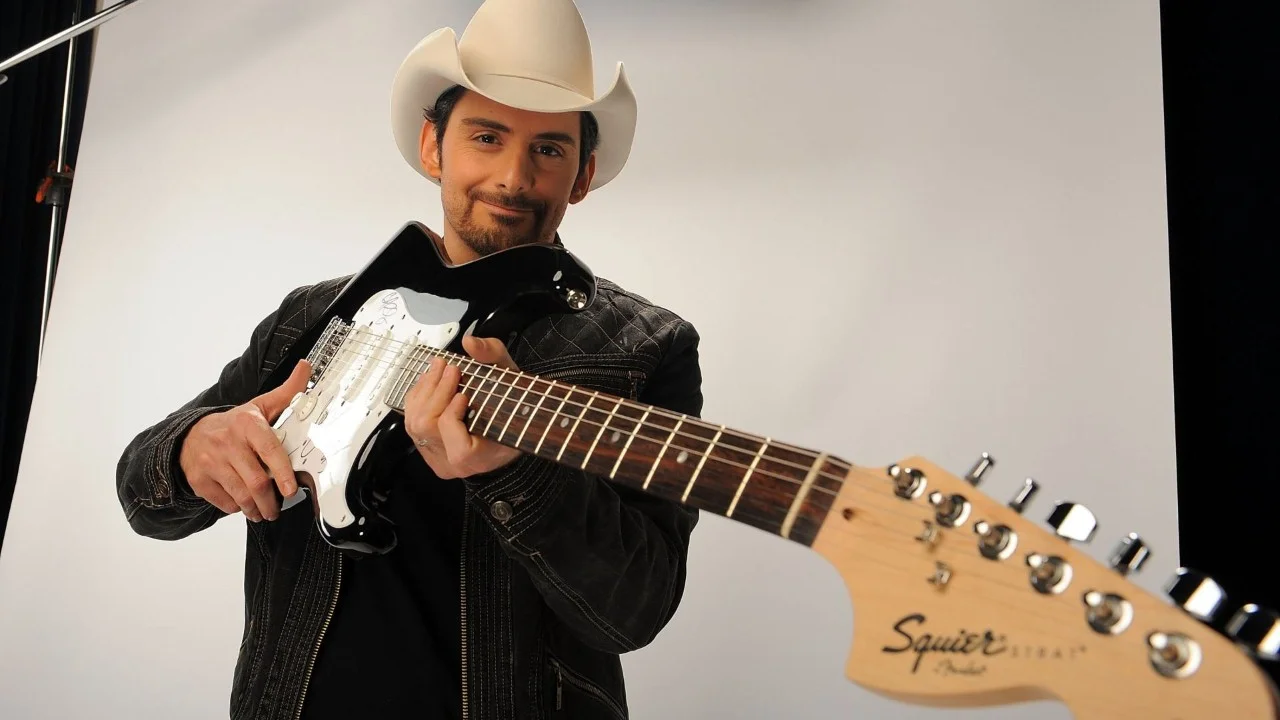
Fender’s account of Brad Paisley’s Road Worn Telecaster identifies a custom-wound bridge pickup and a Twisted Tele neck pickup, along with the construction choices made with Paisley. His accompanying interview describes direct involvement in the instrument. That is good evidence about a specific signature model and his relationship to it.
It is not evidence that every Paisley recording uses that exact guitar, pickup position or amplifier. The useful listening move is to hear a passage and write down its attack and articulation, then consult a relevant performance or session account. A product description can illuminate an instrument’s design; it cannot retroactively establish an entire artist’s recorded signal chain.
Keith Urban shows why rigs need dates
Premier Guitar’s rig conversations with Keith Urban and his technician document particular setups at particular moments. Those first-person demonstrations are more informative than a gear list assembled from photographs. They also show why a musician’s equipment should be dated. A touring rig can evolve, and a stage setup is not necessarily the setup used for an album master.
When comparing Urban with Paisley, keep the musical question narrow. Follow the edge of an attack, the length of a held note or the way a phrase joins the vocal. Do not reduce either musician to a single trademark sound. A comparison becomes more interesting when you notice a clean phrase from a player you associate with grit, or a rougher edge within an otherwise crisp arrangement.
A tone spectrum that avoids false certainty
Use the table as a language guide. It is an original listening framework, not a chart assigning every artist to one fixed position. Choose a recording, locate one phrase and select the words that best describe it. If two listeners disagree, replay the phrase and identify which part of the sound each person is attending to.
| Dimension | One end | Other end | Listen for |
|---|---|---|---|
| Attack | Rounded | Sharp | The first instant of the note |
| Sustain | Short | Lingering | How the note decays |
| Texture | Clean | Saturated | Roughness around the note |
| Register | Low | High | The pitch area of the phrase |
| Space | Dry | Reverberant | The audible tail around the sound |
The player is part of the sound
Before buying equipment to chase a record, listen for phrasing. A bend approaches a note; a slide connects notes; a muted attack changes their length and edge. Two musicians using similar instruments can produce different results because their hands organize the sound differently. Gear accounts matter most when they are connected to an actual musical choice.
Build a three-phrase notebook: one clean passage, one sustained lead and one visibly or audibly more saturated example. Keep their sources and dates. Describe what changes when the phrase is placed under a vocal versus allowed to lead. That final comparison puts tone back into arrangement, where a sound is valuable because of the job it does in the song.
When saving a rig note, include the demonstration date and whether the speaker is the player, technician or manufacturer. The source may be authoritative about that instrument while saying nothing about the song you are researching. Match the scope of the evidence to the scope of the claim.
Follow the sources
Explore the original records, archive material and published accounts behind this article. Each source describes a particular release, performance, collection or event; keep that context when comparing examples.
Related artist guides
 Brad PaisleyArtist, recordings & live dates ↗
 Keith UrbanArtist, recordings & live dates ↗
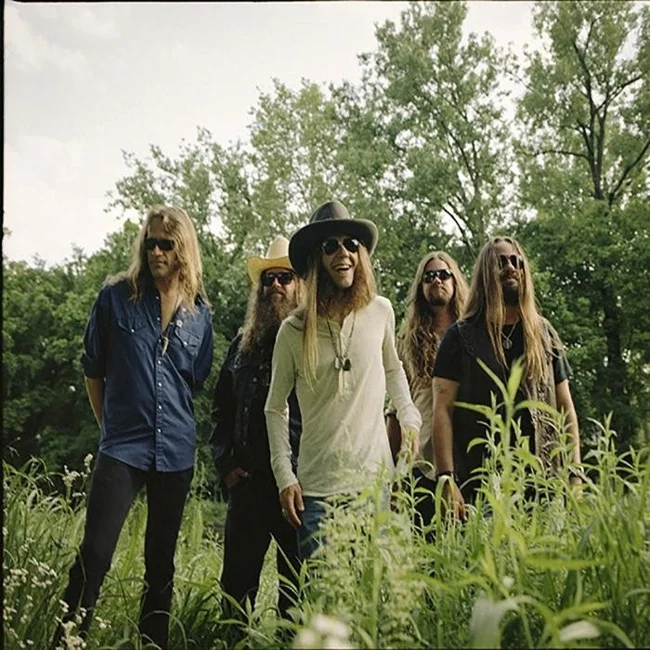 Blackberry SmokeArtist, recordings & live dates ↗